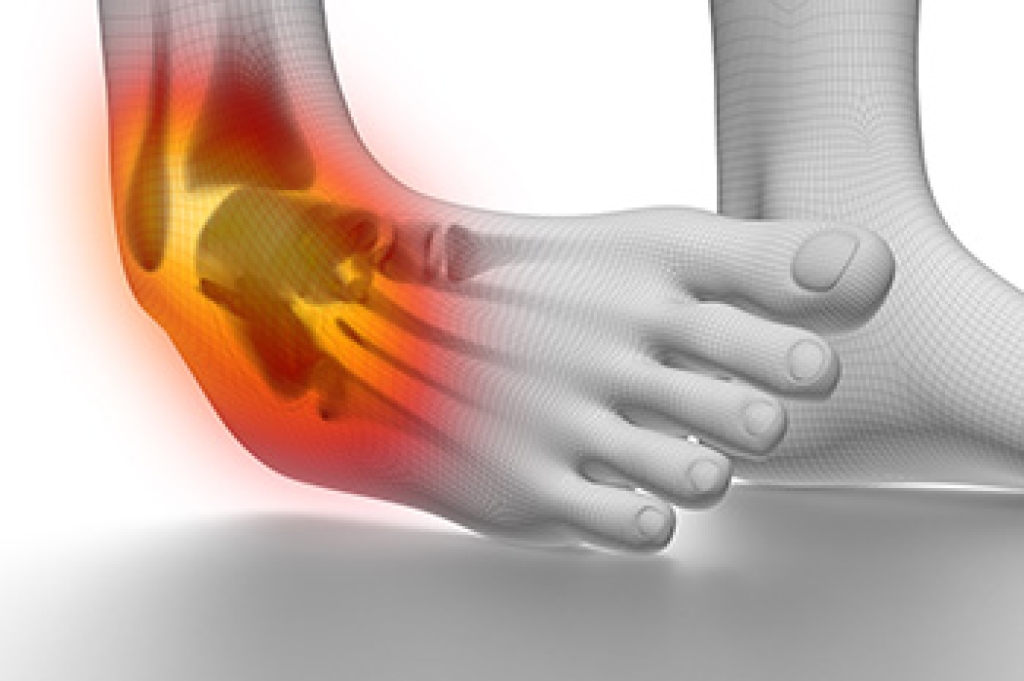
Ankle Sprain Types and Podiatric Care

An ankle sprain occurs when the ligaments that support the ankle are stretched or torn due to sudden twisting or impact. The most common type is an inversion sprain, where the foot rolls inward and damages the outer ankle ligaments. An eversion sprain happens when the foot rolls outward, affecting the inner ligaments and often causing more severe injury. Ankle sprains are also classified by grades. A mild grade involves ligament stretching with slight pain and swelling. A moderate grade includes partial tearing, increased swelling, bruising, and difficulty walking. A severe grade involves complete ligament rupture with significant pain, instability, and loss of function. A podiatrist can help by accurately diagnosing the type and severity of the sprain, providing immobilization, if needed, guiding rehabilitation, and recommending supportive footwear or orthotics. If you have ankle pain, swelling, or difficulty bearing weight, it is suggested that you consult a podiatrist who can provide effective relief and treatment techniques.

Ankle sprains are common but need immediate attention. If you need your feet checked, contact Renee Rodriquez, DPM from Foot Clinic of South Texas. Our doctor can provide the care you need to keep you pain-free and on your feet.

How Does an Ankle Sprain Occur?

Ankle sprains take place when the ligaments in your ankle are torn or stretched beyond their limits. There are multiple ways that the ankle can become injured, including twisting or rolling over onto your ankle, putting undue stress on it, or causing trauma to the ankle itself.

What Are the Symptoms?

  • Mild to moderate bruising
  • Limited mobility
  • Swelling
  • Discoloration of the skin (depending on severity)

Preventing a Sprain

  • Wearing appropriate shoes for the occasion
  • Stretching before exercises and sports
  • Knowing your limits

Treatment of a Sprain

Treatment of a sprain depends on the severity.  Many times, people are told to rest and remain off their feet completely, while others are given an air cast. If the sprain is very severe, surgery may be required.

If you have suffered an ankle sprain previously, you may want to consider additional support such as a brace and regular exercises to strengthen the ankle.

If you have any questions please feel free to contact our office located in Brownsville, TX . We offer the newest diagnostic tools and technology to treat your foot and ankle needs.


Read more about Ankle Sprains

Plantar Warts Can Be Treated!

Plantar warts are small growths that develop on parts of the feet that bear weight. They're typically found on the bottom of the foot. Don't live with plantar warts, and call us today!

Various Reasons for Pain in the Big Toe

The big toe is also known as the great toe, and is considered to be one of the most important joints in the body. It has various functions, including walking heel to toe, and balancing while running, jumping, or dancing. There is a joint on the bottom of the big toe that is known as the tarsometatarsal (TMT) joint, and the proximal Interphalangeal joint is found across from it. These joints can become damaged from participating in high-impact sporting activities, and will often become painful and swollen. Another form of discomfort occurring in the big toe is known as gout. This develops as a result of excess uric acid in the blood that can form crystals in the joints of the big toe, often causing debilitating pain. Extensor tendonitis is a foot condition that may happen from having tight calf muscles, and the pain is felt when the big toe is extended. Many people have osteoarthritis of the joints in the big toe, and a bunion may gradually develop, if not promptly treated. If you have pain in your big toe, it is strongly urged that you speak with a podiatrist who can properly diagnose and treat toe pain.

Toe pain can disrupt your daily activities. If you have any concerns, contact Renee Rodriquez, DPM of Foot Clinic of South Texas. Our doctor can provide the care you need to keep you pain-free and on your feet.

What Causes Toe Pain?

Most severe toe pain is caused due to a sports injury, trauma from dropping something heavy on the toe, or bumping into something rigid. Other problems can develop over time for various reasons.

Toe pain can be caused by one or more ailments. The most common include:

  • Trauma
  • Sports injury
  • Wearing shoes that are too tight
  • Arthritis
  • Gout
  • Corns and calluses
  • Hammertoe
  • Bunions
  • Blisters
  • Ingrown toenails
  • Sprains
  • Fractures (broken bones)
  • Dislocations

When to See a Podiatrist

  • Severe pain
  • Persistent pain that lasts more than a week
  • Signs of infection
  • Continued swelling
  • Pain that prevents walking

Diagnosis

In many cases the cause of toe pain is obvious, but in others, a podiatrist may want to use more advanced methods to determine the problem. These can range from simple visual inspections and sensation tests to X-rays and MRI scans. Prior medical history, family medical history, and any recent physical traumatic events will all be taken into consideration for a proper diagnosis.

Treatment

Treatments for toe pain and injuries vary and may include shoe inserts, padding, taping, medicines, injections, and in some cases, surgery. If you believe that you have broken a toe, please see a podiatrist as soon as possible.

If you have any questions please contact our office located in Brownsville, TX . We offer the newest diagnostic and treatment technologies for all your foot and ankle needs.

Read more about Toe Pain

Awareness Makes a Difference With Plantar Fasciitis

Understanding the early signs of plantar fasciitis can help prevent the condition from becoming a long lasting source of heel discomfort. Many people first notice a sharp ache when taking the first steps in the morning or after sitting for a while. This irritation develops when the thick band of tissue along the bottom of the foot becomes strained, often from overuse, inadequate support, or tight calf muscles. Paying attention to these early signals allows you to adjust activity, improve footwear, and explore gentle stretching before the pain becomes more persistent. Ignoring the issue can affect walking, balance, and overall mobility. Staying informed encourages quicker relief and helps protect the long-term health of your feet. If you have recurring heel pain or morning stiffness, it is suggested that you schedule an appointment with a podiatrist for appropriate guidance.

Plantar fasciitis is a common foot condition that is often caused by a strain injury. If you are experiencing heel pain or symptoms of plantar fasciitis, contact Renee Rodriquez, DPM from Foot Clinic of South Texas. Our doctor can provide the care you need to keep you pain-free and on your feet.

What Is Plantar Fasciitis?

Plantar fasciitis is one of the most common causes of heel pain. The plantar fascia is a ligament that connects your heel to the front of your foot. When this ligament becomes inflamed, plantar fasciitis is the result. If you have plantar fasciitis you will have a stabbing pain that usually occurs with your first steps in the morning. As the day progresses and you walk around more, this pain will start to disappear, but it will return after long periods of standing or sitting.

What Causes Plantar Fasciitis?

  • Excessive running
  • Having high arches in your feet
  • Other foot issues such as flat feet
  • Pregnancy (due to the sudden weight gain)
  • Being on your feet very often

There are some risk factors that may make you more likely to develop plantar fasciitis compared to others. The condition most commonly affects adults between the ages of 40 and 60. It also tends to affect people who are obese because the extra pounds result in extra stress being placed on the plantar fascia.

Prevention

  • Take good care of your feet – Wear shoes that have good arch support and heel cushioning.
  • Maintain a healthy weight
  • If you are a runner, alternate running with other sports that won’t cause heel pain

There are a variety of treatment options available for plantar fasciitis along with the pain that accompanies it. Additionally, physical therapy is a very important component in the treatment process. It is important that you meet with your podiatrist to determine which treatment option is best for you.

If you have any questions, please feel free to contact our office located in Brownsville, TX . We offer the newest diagnostic and treatment technologies for all your foot care needs.


Read more about Plantar Fasciitis

The Agony of Gout and How a Podiatrist Can Help

Gout is a painful form of arthritis that often affects the big toe, though it can strike other joints in the feet and ankles. It tends to occur more commonly in men over 40 and in women after menopause. Gout develops when uric acid builds up in the bloodstream and forms sharp crystals in the joints. These crystals cause sudden and intense pain, redness, swelling, and warmth that may make even a bedsheet feel unbearable against the skin. The affected joint often appears shiny and inflamed, and attacks can come on suddenly, sometimes overnight. A podiatrist can help by accurately diagnosing gout through examination, imaging, and lab testing. Treatments include medication to reduce pain and inflammation, dietary guidance, and strategies to prevent future flare ups. It is suggested that if you experience symptoms of gout, you make an appointment with a podiatrist for professional care and relief.

Gout is a painful condition that can be treated. If you are seeking treatment, contact Renee Rodriquez, DPM from Foot Clinic of South Texas. Our doctor will treat your foot and ankle needs.

What Is Gout?

Gout is a form of arthritis that is characterized by sudden, severe attacks of pain, redness, and tenderness in the joints. The condition usually affects the joint at the base of the big toe. A gout attack can occur at any random time, such as the middle of the night while you are asleep.

Symptoms

  • Intense Joint Pain - Usually around the large joint of your big toe, and it most severe within the first four to twelve hours
  • Lingering Discomfort - Joint discomfort may last from a few days to a few weeks
  • Inflammation and Redness -Affected joints may become swollen, tender, warm and red
  • Limited Range of Motion - May experience a decrease in joint mobility

Risk Factors

  • Genetics - If family members have gout, you’re more likely to have it
  • Medications - Diuretic medications can raise uric acid levels
  • Gender/Age - Gout is more common in men until the age of 60. It is believed that estrogen protects women until that point
  • Diet - Eating red meat and shellfish increases your risk
  • Alcohol - Having more than two alcoholic drinks per day increases your risk
  • Obesity - Obese people are at a higher risk for gout

Prior to visiting your podiatrist to receive treatment for gout, there are a few things you should do beforehand. If you have gout you should write down your symptoms--including when they started and how often you experience them, important medical information you may have, and any questions you may have. Writing down these three things will help your podiatrist in assessing your specific situation so that he or she may provide the best route of treatment for you.

If you have any questions, please feel free to contact our office located in Brownsville, TX . We offer the newest diagnostic and treatment technologies for all your foot care needs.

Read more about Everything You Need to Know About Gout

Connect With Us

Request Appointment Patient Portal